





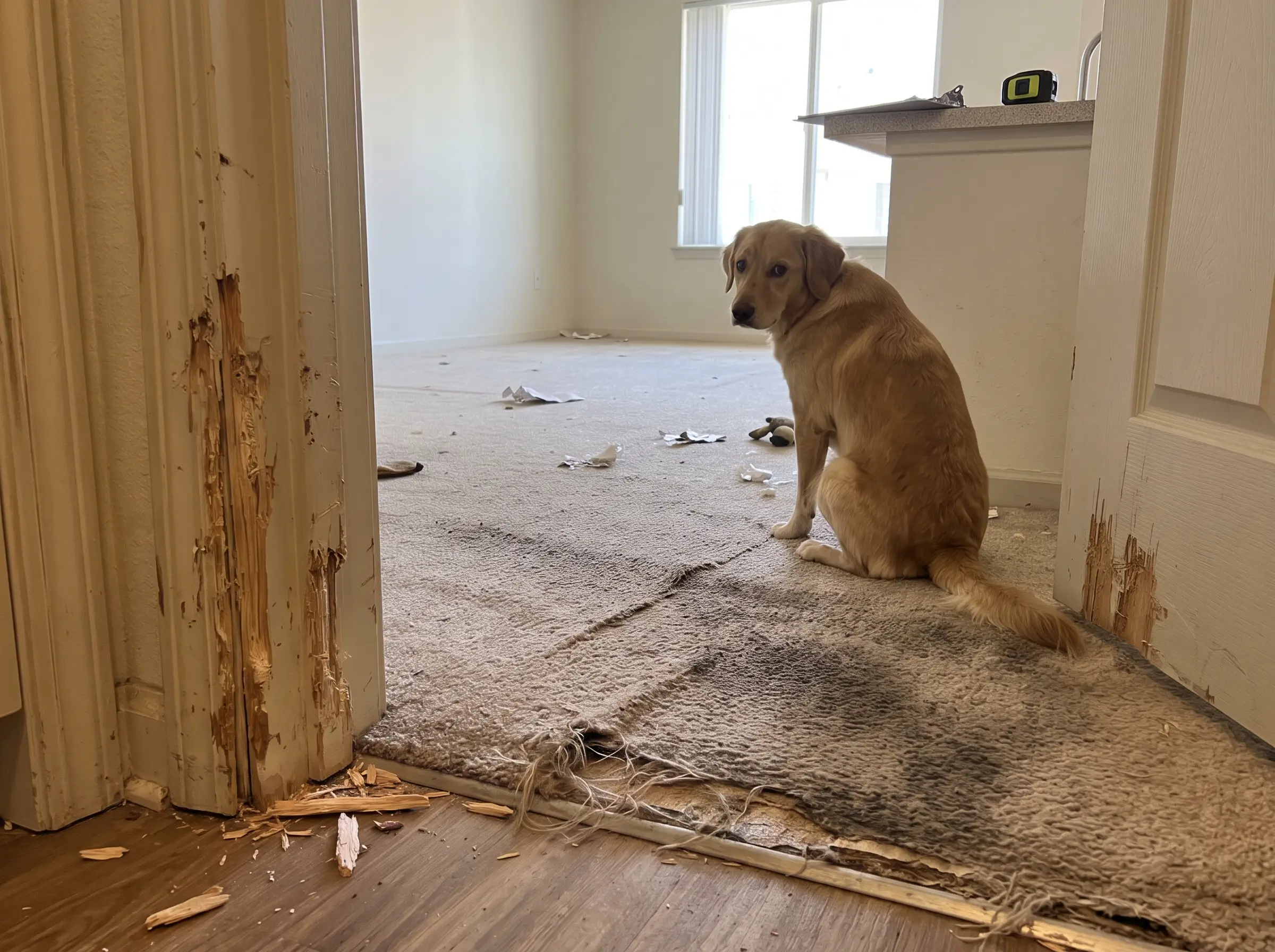
Pet damage ranks among the biggest headaches in rental housing. In PetScreening’s 2026 State of Pets in Rental Housing Report, property managers and leasing professionals named pet damage as one of the primary issues at their properties. That survey drew responses from 673 operators.
A chewed door frame feels like an easy deduction. So does a scratched floor. Under California law, only one of them might hold up.
The difference comes down to the rules, the records and the timing. Here is how pet damage at move-out works for California landlords.
Key Takeaways
- California landlords can deduct for pet damage only when it goes beyond normal wear and tear.
- Any pet deposit counts toward the statewide deposit cap and must stay refundable.
- AB 2801 photos are required to support security deposit deductions.
- The itemized statement is due within 21 days, with receipts for costs over $125.
How California Landlord Tenant Law Treats Pet Damage
California Civil Code section 1950.5 allows deductions for unpaid rent and cleaning costs. It also covers repairing damage beyond normal wear and tear, which is where pet caused damage falls. Here are the rules that shape every pet-related charge:
- Most California landlords can collect no more than one month’s rent as a security deposit. Any pet deposit counts toward that cap, and none of it can be labeled nonrefundable.
- The small landlord exception lets natural persons who own no more than two residential rental properties with four or fewer units collect up to two months’ rent. It does not apply to service members.
- Service animals and emotional support animals can’t be charged a pet deposit or pet rent. Tenants still pay for any damage they cause.
- Local ordinances may add rules. San Francisco, for example, requires annual interest on deposits.
Pet Damage vs. Normal Wear and Tear
Most deposit disputes start right here. Here are the differences that hold up when a tenant pushes back.
Pet damage goes beyond normal wear and usually comes from a single incident or an unchecked habit. Charges still have limits. Old carpet is often prorated, and professional carpet cleaning must tie back to move-in cleanliness. Common examples include:
- Urine-soaked carpet and padding
- Chewed baseboards and door frames
- Deep gouges in hardwood floors
- Unauthorized paint colors
Normal wear is the slow decline that happens because a tenant lived in the home. These costs usually stay with the landlord, and California courts look closely at the property’s condition before deciding. Items considered normal wear include:
- Light floor scratches
- Worn carpet paths
- Faded paint
- Minor wall scuffs
Advantage Property Management Services protects Pleasanton rental property owners from costly damage and liability with hands-on, full-service management. Request a free quote and see what a higher standard looks like for your rental.
The Documentation California Requires Before Security Deposit Deductions
Paperwork decides most pet damage claims. Here are the documentation steps state law now expects.
Photos Are Required at Move-In and Move-Out
AB 2801 requires move-in photos for tenancies that began on or after July 1, 2025. For every tenancy, landlords must take move-out photos before repairs start and again after the work is done. Those photos go to the tenant with the itemized statement. The California Apartment Association breaks down the details.
Tenants Can Request a Pre-Move-Out Inspection
Landlords must give written notice of the tenant’s right to a pre-move-out inspection. The landlord lists any problems, giving the tenant time to fix them. Patching a chewed baseboard early often costs less than a deduction and helps prevent tenant disputes.
Deductions Over $125 Need Receipts
Repair or cleaning costs over $125 need a receipt or estimate attached to the itemized list. Keep all deductions receipts in the tenant file. When repairs take longer than 21 days, the landlord may deduct a good faith estimate and send final receipts within 14 days of completion.
Handling the Security Deposit Return Within 21 Days
The deadline is strict. Landlords have 21 calendar days after the tenant moves out to send the unused portion of the deposit and an itemized statement. The clock starts when the tenant vacating the unit returns possession. Here are the steps that keep the final accounting clean:
- Send the statement to the tenant’s forwarding address or last known address. Give each pet charge its own line, matched to before and after photos.
- Owners who fix pet damage themselves must describe the work and the time it took. The hourly rate must be reasonable.
- If the property sells, the original owner must transfer the deposit to the new owner or return it to the tenant. Written notice is required either way.
- Tenant rights are strong here. A landlord who withholds a deposit in bad faith may owe up to twice the deposit amount in small claims court.
Frequently Asked Questions
Q: Can a landlord charge pet rent in California?
Yes. Tenants pay rent and pet rent together each month. Pet rent counts as additional rent, so the deposit cap doesn’t apply to it. Local rent control rules may still limit increases.
Q: What happens when pet damage costs more money than the deposit?
The landlord can sue for the balance in small claims court. Strong photos and receipts make that claim much easier to win.
Q: Can a landlord deduct for flea treatment after a pet moves out?
Usually, yes. Treatment is fair game when the infestation started during the tenancy and the unit needs it to return to move-in condition.
Protect the Deposit Before the First Paw Print
Pet damage claims rarely come down to the damage alone. They come down to records. Clear lease terms and solid photos put California landlords on firm ground, and a timely itemized statement finishes the job.
The best time to protect a deposit is on move-in day. A clear pet policy sets expectations early, and every photo taken then pays off when the tenant moves out. Consistent records mean fewer deposit disputes down the road.
Advantage Property Management Services gives owners in Pleasanton, Livermore, Dublin and San Ramon the freedom to stay hands-off while their rentals stay protected. Contact our team today to start the conversation.
