


Disclaimer: This content is provided for informational purposes only and does not constitute legal advice. Advantage Property Management Services is not a law firm. For guidance specific to your property, consult a licensed California attorney.
Package theft, vandalism, and disputes over who actually caused damage to a unit have pushed a lot of owners toward installing security cameras on their properties. It’s a reasonable instinct, and California law does give landlords real room to do it. What trips owners up is not whether cameras are allowed, but where they point and whether they pick up sound, since both of those questions are governed by criminal statutes that carry real penalties, not just polite guidelines.
Key Takeaways
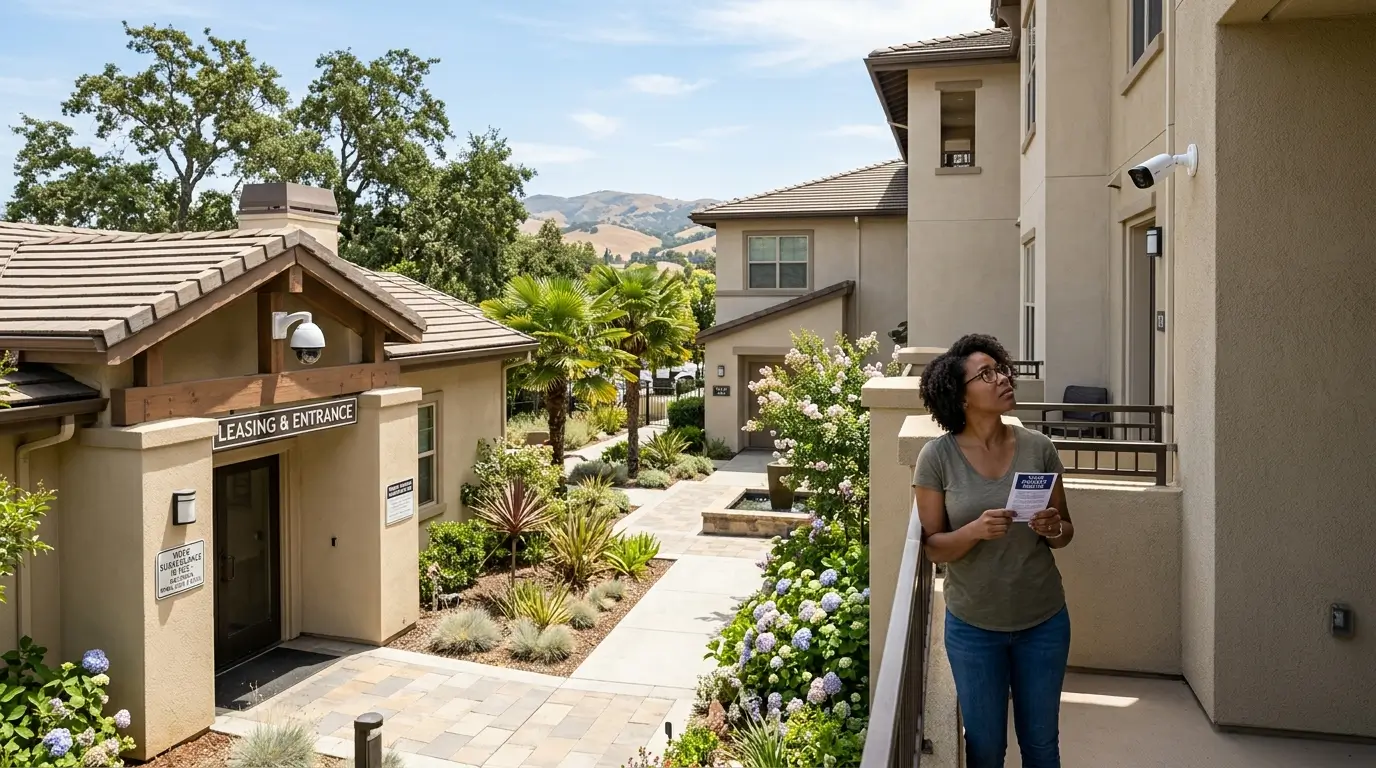
Landlords can install cameras in common areas like hallways, parking lots, laundry rooms, and building entrances without violating state law.
Cameras can never be placed inside a tenant's unit or in any area where someone has a reasonable expectation of privacy, such as a bathroom.
California is a two-party consent state for audio recording, so a security camera that captures conversations without everyone's consent creates separate legal exposure even if the video itself is lawful.
Tenants generally have the right to install their own devices, like a Ring doorbell, inside their unit, though lease terms can restrict devices that capture common areas or a neighbor's space.
Clear, written camera policies in the lease protect owners from disputes far more effectively than handling it case by case.
Where You Can Point a Camera, and Where You Cannot
The dividing line in California surveillance law comes down to a single concept: reasonable expectation of privacy. Common areas that every resident shares, like a lobby, parking lot, laundry room, or the walkway leading to building entrances, do not carry that expectation, so cameras are generally allowed there for property and resident safety. The moment a camera captures the inside of a rental unit, a bathroom, or any space where someone could reasonably expect to be alone, the calculation changes entirely.
California Penal Code Section 647(j) makes it a criminal offense to use a camera or similar device to view or record someone in a private space like a bedroom or bathroom without consent, and this applies with full force to landlords, not just strangers or trespassers. A hidden camera inside a rented unit is not a gray area under this statute regardless of whether the landlord owns the property, and the same rule applies to cameras aimed at capturing what happens inside a unit through a window or open door.
The Audio Recording Problem Most Owners Never Think About
Video is only half the legal picture. California is one of a small number of two-party consent states under Penal Code Section 632, which means recording a confidential conversation requires the consent of everyone involved, not just the person doing the recording. A security camera with a built-in microphone that happens to pick up a tenant's phone call in a hallway, or a conversation between two people near an entrance, can create a separate violation even if the video footage itself was perfectly legal to capture.
The practical fix is simple. Most security professionals in California recommend disabling audio recording entirely on cameras placed in common areas, or posting clear, visible signage disclosing that audio is being recorded so the two-party consent requirement is satisfied through notice. Video-only systems avoid the issue altogether and still accomplish what most owners actually want, which is a visual record of who came and went and what happened.
When a Tenant Wants to Install Their Own Camera
Package theft has made video doorbells common, and tenants generally have the right to install one inside their own unit's entry, provided the lease does not explicitly prohibit security devices and the installation does not cause permanent damage to the property. Where it gets more complicated is field of view. A doorbell camera mounted at a tenant's door that also captures a neighbor's entrance, a shared parking area, or a common hallway raises the same privacy concerns a landlord-installed camera would.
Addressing this in the lease upfront, rather than after a dispute arises, is the more defensible path. Spelling out what tenants may install, where it may point, and what happens to the device at move-out avoids the awkward conversation that comes from confiscating a camera after the fact. Our legal compliance team can help build language into your lease that covers tenant-installed devices without leaving the door open to a dispute later.
Cameras Do Not Replace Proper Notice for Entry
A camera in a common area is not the same thing as monitoring a tenant's use of their unit, and owners sometimes blur that line without realizing it. California's rules on when and how a landlord may enter a rental unit are separate from surveillance law entirely, and we cover those requirements in detail in our guide on California landlord right of entry. A camera cannot substitute for the notice a tenant is legally owed before an owner or manager enters, and using one to track a tenant's comings and goings in a way that feels like surveillance of their private life can create liability well beyond a simple privacy complaint.
Documentation during a move-in or move-out inspection is a different matter entirely and remains one of the best tools an owner has. Photographing the condition of a unit as part of our rent ready standards process gives owners a clear record without raising any of the ongoing surveillance concerns that come with a camera pointed at a tenant's daily life.
Camera and Tenant Privacy FAQ
Can I install a security camera inside a tenant's unit?
No. Cameras can never be placed inside a tenant's rental unit, regardless of whether the tenant is home, whether the camera is disclosed, or whether the landlord owns the property.
Do I need to disable audio on my security cameras?
California's two-party consent law makes recording a conversation without everyone's consent a separate violation from video recording. Disabling audio or posting clear signage that audio is being recorded is the safest approach for common area cameras.
Can I stop a tenant from installing a Ring doorbell?
A lease can restrict security devices, particularly ones that capture common areas or a neighbor's space, but tenants generally have the right to install a doorbell camera at their own entry if the lease does not prohibit it and installation causes no permanent damage.
Where are cameras always allowed in a rental property?
Shared spaces like parking lots, laundry rooms, lobbies, and building entrances generally do not carry a reasonable expectation of privacy, so cameras are permitted there for security purposes.
Building a Camera Policy That Protects Everyone
Security cameras are a legitimate tool for protecting a rental property, but California draws a hard line around where they can point and whether they record sound, and that line is enforced through criminal statutes rather than just civil disputes. Getting a written policy into the lease before a camera ever goes up, whether it is one you are installing or one a tenant wants to add, is what actually prevents the kind of dispute that turns a security upgrade into a liability.
If you want help reviewing your current camera setup or building clear language into your lease agreements, reach out to our property management team any time.